The key rotates. The aluminum storefront on a Chula Vista shop does not. Opening time is here, staff is on the sidewalk, and forcing the glass is a bad next step. A commercial locksmith is the licensed trade that inspects that door in person after they confirm you have a right to it.
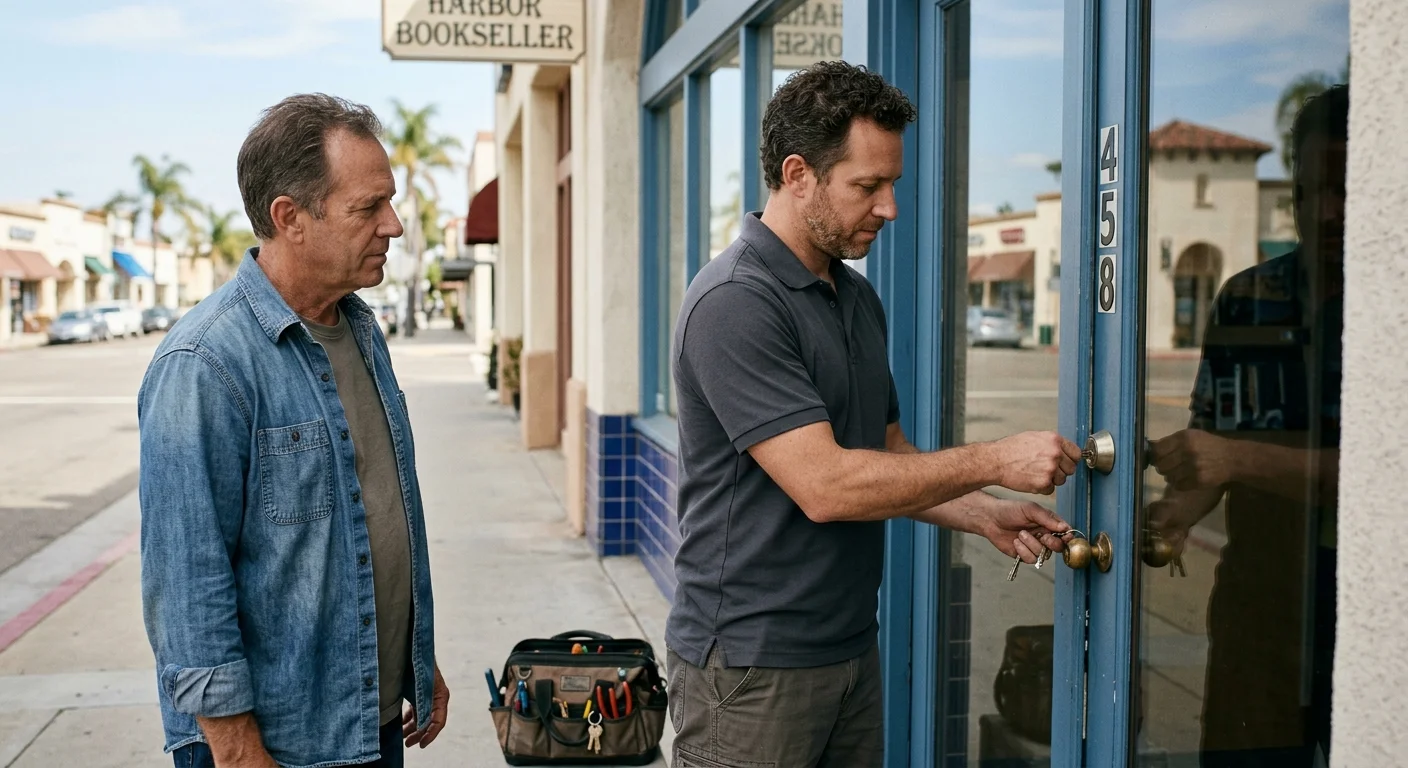
Confirm which storefront entrance is affected
Name the door before anyone touches hardware. Chula Vista shops often have more than one public face, and the wrong door wastes the visit.
West of I-805, older retail still clusters along Broadway and around Third Avenue Village. Those buildings tend to mix a customer glass door, a side alley door, and sometimes a rear service door toward the parking. East of I-805, Otay Ranch and Eastlake pads usually sit in a shopping center with a main storefront, a mall-side or plaza-side door, and a back-of-house door on the service drive. The key in your hand may belong to only one of those.
Stand at the door that will not open. Say the street, the suite, and whether it is the customer entrance, a second public door, or the staff door. If you lease inside a center, add the center name you use with the property manager. Otay Ranch Town Center, Eastlake retail strips, and the Broadway corridor do not share the same lock layout, even when the glass looks similar.
Check whether the same key still works at another door you are allowed to use. A key that turns here and opens in back is useful information. A key that turns everywhere and opens nowhere is different information. Do not treat that as a diagnosis. It is only a map of which openings you already control.
Write down who is present. Owner, manager, opening shift, property staff. Commercial work in California is licensed locksmith work. The independent locksmith has to know they are opening the right suite for the right person. A former employee with an old key, or a vendor at the wrong address, is not a small mix-up on Third Avenue. It is a reason the job stops.
If customers are already arriving, move them to a safe waiting spot. Do not prop a second door open across a path you cannot watch. Do not take the door off its closer. You are confirming which entrance failed. You are not converting the storefront into an open bay.
Swift Key San Diego serves Chula Vista with the rest of San Diego County. We match you with a licensed independent locksmith. We do not own the shop, hold the suite, or decide which leaf is the legal entrance. That confirmation is yours to state clearly when you call.
A related Chula Vista guide is locksmith near me in Chula Vista, if you need the city layout before you call.
Separate key movement from latch movement
A turning key is not an open door. Those are two different motions, and you should describe both without taking the lock apart.
Watch the cylinder. The key should insert, then rotate. Note whether it turns a full sweep, a partial sweep, or spins with no stop. Note whether it turns both directions or only one. Stop there. Do not spray, tap, or drill. Do not try to “walk” the bolt with extra pressure on the key. A worn key can finish turning after the lock inside has already stopped doing useful work.
Watch the door edge next, from the outside only. When the key turns, look for any movement at the latch or bolt. Some storefronts show a small shift in the strike gap. Some show nothing. Either observation is enough. You are not proving a failed latch from the sidewalk. You are telling the locksmith what you saw.
Keep the key in the lock only as long as you need that look. Pull it if it starts to bind. A broken key in a Chula Vista storefront cylinder is a second problem stacked on the first.
This symptom is not the same as a door that will not shut. If the leaf already closes and the lock will not release, stay on this page. If the leaf will not come back to the frame at all, that is a different job, covered in when a commercial door will not close. Mixing those two on the phone sends the wrong picture.
West-side storefronts closer to San Diego Bay take more marine air than Eastlake or Otay Ranch. Salt, grit, and a sticking threshold show up more often on older Broadway glass than on a new inland pad. That is climate, not a remote verdict. Heat inland can swell a metal door in a different way. The locksmith still has to see the opening. Coastal weather is a reason to describe the building’s side of town. It is not a reason to oil the cylinder from a parts-store can.
Do not diagnose pin wear, a bent latch, a miscut key, or a failed Adams-style storefront mechanism from this article. California locksmith work includes opening, repairing, rekeying, installing, and originating keys under Business and Professions Code section 6980(j). That work belongs to a person licensed through the Bureau of Security and Investigative Services, not to a manager with a screwdriver.
If you want a county-wide picture of storefront hardware after the door is open again, read storefront door lock repair in San Diego. Use it as background. Use the person on site for the cylinder in front of you.
Check authorized alternate access
Before anyone works the stuck leaf, ask whether you already have a legal way in.
Many Chula Vista suites keep a rear door on the alley or service lane. Some keep a connecting door from a neighbor they share a pad with. Some keep a key in a manager’s box that only the owner and the property team may open. Use an alternate door only if you already have authority to use it. Do not borrow a neighboring tenant’s entrance. Do not ask a passerby to “try a card” in the gap.
If you can enter through a door you control, go in, lock that path behind you if it is supposed to be locked, and wait. Staff can work from inside while the customer door stays shut. That is often calmer than a crowd on the sidewalk along Broadway or a plaza walkway in Otay Ranch.
If you cannot enter, stay outside and keep the opening in view. Do not hide the failed door with signs and walk away. Do not leave the key in the cylinder unattended.
Authorization is the gate. A commercial locksmith in California may not treat a turning key as proof that you own the suite. Be ready to show photo ID plus something that ties you to that address: a lease, a business card that matches the posted name, a letter from the owner, or a property-manager contact who will confirm the unit. Former staff, vendors, and landlords in a dispute all produce messy mornings. The locksmith is right to pause.
Swift Key San Diego is a referral service. We match callers with licensed independent locksmiths. We do not employ the technician, we do not hold a BSIS locksmith license, and we do not set the price. The locksmith you hire confirms identity on site. You contract with that locksmith directly.
If nobody on the team can prove the suite, do not improvise an opening. Call the property manager. Call the owner. If you believe a crime is in progress, call Chula Vista Police. A locksmith is the wrong first call for a break-in in progress.
Keep copies of keys accounted for while you wait. A key that turns but does not open is still a key. Do not hand it to an unlicensed helper who offers to “pop it real quick” in the parking lot.
Identify the lock, door, and frame boundaries
Say what you can see. Do not take the assembly apart.
Name the leaf: single glass door, pair of doors, or a door with a sidelight. Name the hardware you can see without removing covers: a keyed cylinder in the rail, a lever, a thumbturn on the inside if you can already see in, a panic bar, a closer at the head, a floor lock, a strike in the frame. If you do not know the brand, skip the brand. Guessing “it’s a mortise” from a photo is how jobs get scoped wrong.
Look at the meeting point of door and frame. Is the gap even, or pinched at the head or the latch side? Is the door sitting on the threshold? Is the closer holding the leaf short of the strike? You can report that in plain words. You cannot safely pull the closer arm, loosen the frame, or bend the strike from the sidewalk.
Keep the lock, the door, and the frame as three separate things when you talk. A cylinder can turn while a latch stays put. A latch can move while the door is bound in the frame. A frame can be out of square while the lock is fine. The person who sorts those layers is the locksmith standing at the opening, not a blog post.
Eastlake and Otay Ranch glass often sits in newer aluminum storefront systems with center hardware and a closer. Third Avenue Village and older Broadway bays can mix original storefront rails, later cylinders, and patched strikes. Inland heat and west-side marine air are not the same wear pattern. Tell the locksmith which part of Chula Vista you are in. Telegraph Canyon, Palomar Street, Olympic Parkway, and Broadway are useful landmarks. A suite number is better than “near the freeway.”
Do not order parts from a photo. Do not start a lock replacement in your head because the key turned. Replacement is one possible outcome after inspection. Rekey, repair, strike adjustment, or a door-and-frame conversation with another trade can all be on the table. None of those is a promise from this page.
If glass is cracked, or the rail is folded, stop using the door. That is no longer only a lock. Keep people back from the leaf.
California consumers can verify a locksmith license through the state’s license search before work begins. Ask to see the pocket license when the locksmith arrives. Unlicensed locksmith practice is a misdemeanor under Business and Professions Code section 6980.10, with penalties that can include a fine up to $10,000 and up to one year in county jail. You are not the prosecutor. You are the person who should not hire a cash-only opener with no license to show.
Confirm the independent locksmith’s scope
A commercial locksmith, in California, is a person who, for pay, rekeys, installs, repairs, opens, or modifies locks, or originates keys for locks. That definition is in Business and Professions Code section 6980(j). It includes electronic lock work. It does not include a person whose only work is copying a key from an existing key. Storefront work on a Chula Vista shop is not “just a duplicate.”
The independent locksmith’s job on this call is narrow at first. Confirm you are authorized. Confirm the address and the door. Inspect the cylinder, latch, door, and frame in person. Then tell you what they can do under their BSIS license, and what belongs to another trade.
Locksmith scope usually covers lock-related opening, cylinder work, rekey, and hardware they are equipped and licensed to service. It does not automatically cover a rebuilt storefront, a new glass lite, or a frame the building owner has to approve. If the leaf is bound, the locksmith may stop at the lock and tell you the door needs a different contractor. That is a clean result. It is not a failed visit.
Swift Key San Diego does not quote locksmith fees. We do not waive fees, and we do not publish a commercial rekey price. No verified public rate for a commercial rekey in Chula Vista is on our claims ledger, so this page will not invent one. The locksmith you hire names the price after they see the hardware. Ask for that figure before work starts. You pay that locksmith directly.
We also do not promise arrival windows. We do not run trucks. We do not warranty the work. The matched locksmith does the work and stands behind their own work under their own terms.
Ask what they plan to do to the stuck door. Opening so you can trade is one goal. Leaving the cylinder in a known state is another. If keys are already in too many hands, say so. Rekey or replacement may follow the opening. That is a second decision, not a surprise add-on you have to accept in the parking lot.
Bring the keys that turned. Bring the spare set if you have one. Bring the property-manager number. If the suite is in a center, know whether the landlord has to approve a hardware change. Otay Ranch and Eastlake management rules are not the same as a owner-occupied bay on Broadway. The locksmith cannot guess that from the glass.
If you want a license check in your own words before anyone arrives, use the state’s search at search.dca.ca.gov. Company licenses and employee registrations are both part of how California runs this trade.
When to call us
Call when a Chula Vista storefront key turns and the door still will not open, and you need a licensed locksmith to confirm authorization and inspect the opening in person. Do not force the glass, and do not hire an unlicensed opener. Call us at (858) 400-4082 and we’ll connect you with a licensed local locksmith.