Swift Key San Diego is a referral service. We match you with licensed independent locksmiths. We do not extract keys, sell locks, or set prices.
You’ve just had that sinking feeling: your house key snapped, leaving a piece in the lock. Don’t force it further. A visible stub and a flush break are different jobs.
I just broke my key in the lock: what to do first
A broken key is urgent when it traps you outside at night or in bad weather. If you can’t extract the piece yourself, stop. Pushing a broken key deeper or using the wrong tool can damage the pins and turn extraction into a cylinder swap.
We connect you with a licensed independent locksmith for this kind of emergency locksmith job. They quote extraction. For the professional process, see broken key extraction.
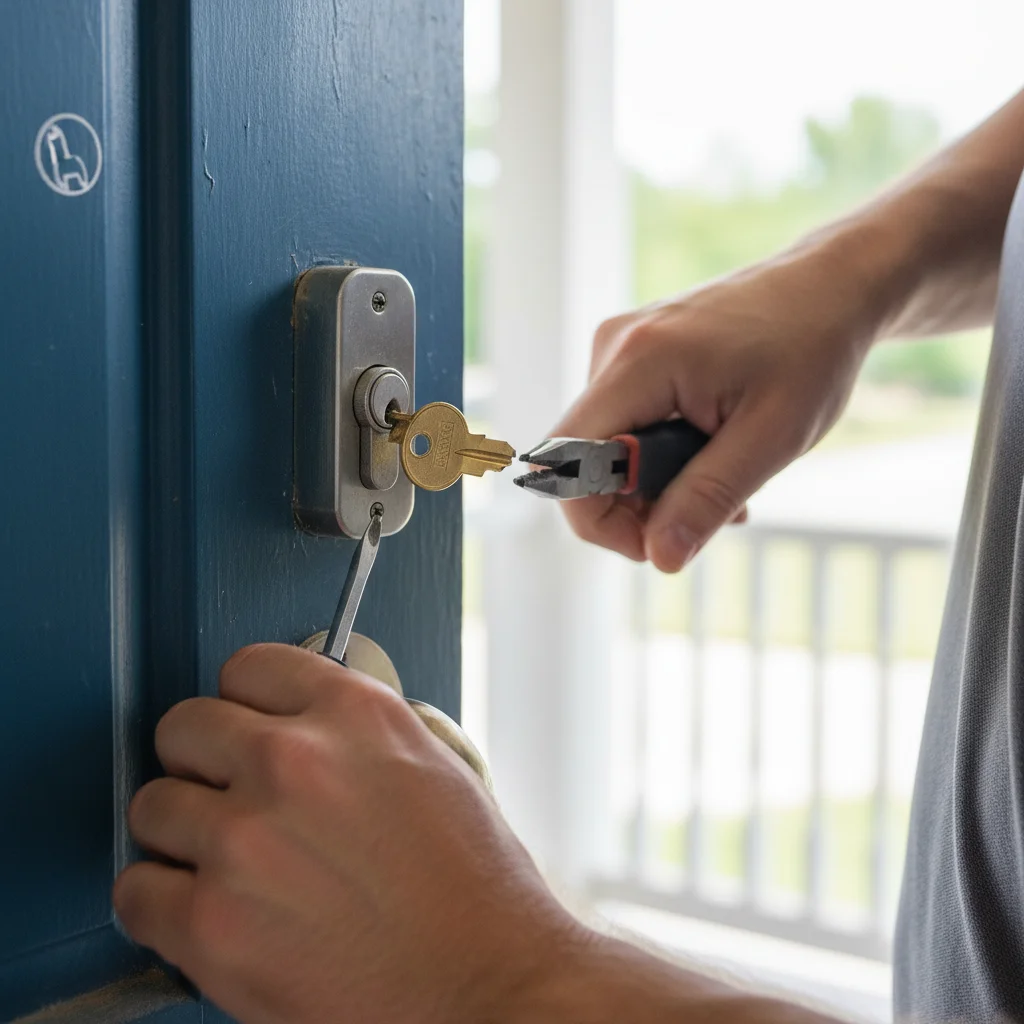
Stop before you make it worse
Don’t poke the fragment with another key or a screwdriver. Extra force can push the piece deeper, damage pins, or bend the stub.
If the key broke in a deadbolt or doorknob, see how much is visible. A stub you can grip is a different first try than a flush break. If you lubricate, use graphite or a PTFE lock lubricant, not a wet spray like WD-40. Patience here can keep the cylinder usable.
DIY extraction methods that actually work
If a piece of the key is still protruding, you might extract it. Use gentle, straight pulls.
Using pliers or tweezers
If enough of the stub is sticking out, use needle-nose pliers or strong tweezers. Grasp the exposed portion. Twist and pull slowly, in line with the keyway. If the lock is in the locked position, some people try a light turn with a flathead beside the fragment to align pins. That is delicate. Stop if it binds.
Using a saw blade or key extractor tool
When the key is flush, you need something thinner. A broken-key extractor is a thin, barbed hook. Insert it alongside the fragment, hook the bitting, and pull straight out. A thin coping-saw or jigsaw blade (teeth up, from the bottom of the keyway) is the same idea. Graphite or silicone lock spray can help. Don’t force or bend.
When the lock is salvageable vs. when it’s not
If you extract the fragment and a working duplicate still turns smoothly, the cylinder may be fine. If the piece is stuck deep, or DIY already chewed the pins, the lock may need rekey or replacement.
Signs the hardware is in trouble: the cylinder will not turn after extraction, a new key grinds, or the keyway is visibly deformed. A damaged lock is a security risk. The matched locksmith inspects and quotes repair versus lock replacement. Swift Key does not inspect.
How a locksmith extracts a broken key
Independent locksmiths in San Diego County use extractor sets, picks, and light. They inspect the fragment before they pull. Graphite or silicone spray reduces friction.
Ask them to quote extraction first, then say whether the cylinder still has a useful life. Outcomes vary. Do not assume the key comes out unmarked or that you will skip replacement.
Once the fragment is out, they may cut a new key from a remaining piece or a code if they have one. If the lock was damaged, they quote repair or a replacement. For after-hours urgency, after-hours terms belong to that locksmith. Confirm on the call. We connect you through emergency locksmith. We do not operate a countywide emergency crew.
You can verify a locksmith’s company license at search.dca.ca.gov. California locksmith work is regulated by BSIS.
Why keys break: brass wear, misalignment, weather
Material wear and tear
Most house keys are brass. Brass wears so the harder pins last longer. Daily turning thins the bitting. A thin key snaps under a bad angle or a stiff cylinder.
Forcing a misaligned key
If the key is not fully in, or the cylinder is sticky, forcing it loads the weakest point, often at the face of the keyway.
Poor quality or duplication
Thin blanks and bad cuts break earlier. A locksmith cut from a decent blank is a different product from a worn original traced at a kiosk.
Environmental factors and lock health
Rust, dirt, and grit stiffen the cylinder. Forcing a dirty lock puts the load on the key. Occasional graphite or PTFE lubricant is maintenance. Skip WD-40 as a long-term lube.
Preventing the next break
Don’t rush or force it
Insert the key fully before you turn. If you feel resistance, stop. Wiggle, remove, and reinsert. If it stays stiff, graphite. Forcing is how keys snap.
Keep your locks maintained
A small amount of graphite in exterior locks on a schedule you will keep helps pins move. Avoid WD-40 for long-term lubrication.
Replace worn keys
Look for thinning, rounded bitting, or cracks. Duplicate a working key before it snaps.
Quality key duplication matters
Ask a locksmith to cut from a good original or a code. Big-box quality varies.
Consider lock upgrades
If the lock is old and stiff, ask the matched locksmith about deadbolt installation or other hardware. Swift Key does not sell a lock catalog.
Frequently asked questions
Is a broken key in the lock an emergency?
It can be, if it leaves you locked outside at night or in unsafe conditions. Ask the locksmith whether they can extract without swapping the cylinder. Waiting and forcing the fragment deeper is the usual way this becomes a replacement.
How much does broken key extraction cost in San Diego?
Ask the locksmith to quote extraction first. If the cylinder was damaged in the snap or by a DIY attempt, they may recommend replacement. They should say that before they start, with hardware and labor as separate lines. Swift Key does not quote.
Can I extract a broken key myself?
Sometimes. If a piece is sticking out enough to grip with needle-nose pliers, a slow, straight pull sometimes works. A barbed extractor can hook the bitting. The risk is pushing the piece deeper. Stop if you meet resistance.
Will the lock still work after a key extraction?
Ask after the fragment is out. If the pins are undamaged, a new key may turn normally. If pins were bent in the snap or a DIY attempt, the cylinder may still need rekeying or replacing. There is no most-cases guarantee on this page.
How do I stop keys from breaking in the lock again?
Replace brass keys showing visible wear before they snap. Lubricate exterior locks with graphite, not WD-40. When you need a spare, ask a locksmith to cut it rather than tracing a worn original at a kiosk.
When to call us
A key that will not turn is often the warning before a snap. See a door key that won’t turn in the lock. If you can’t extract a broken key, or you suspect internal damage, connect with a licensed independent locksmith. Call (858) 400-4082. That locksmith quotes. Swift Key does not quote.