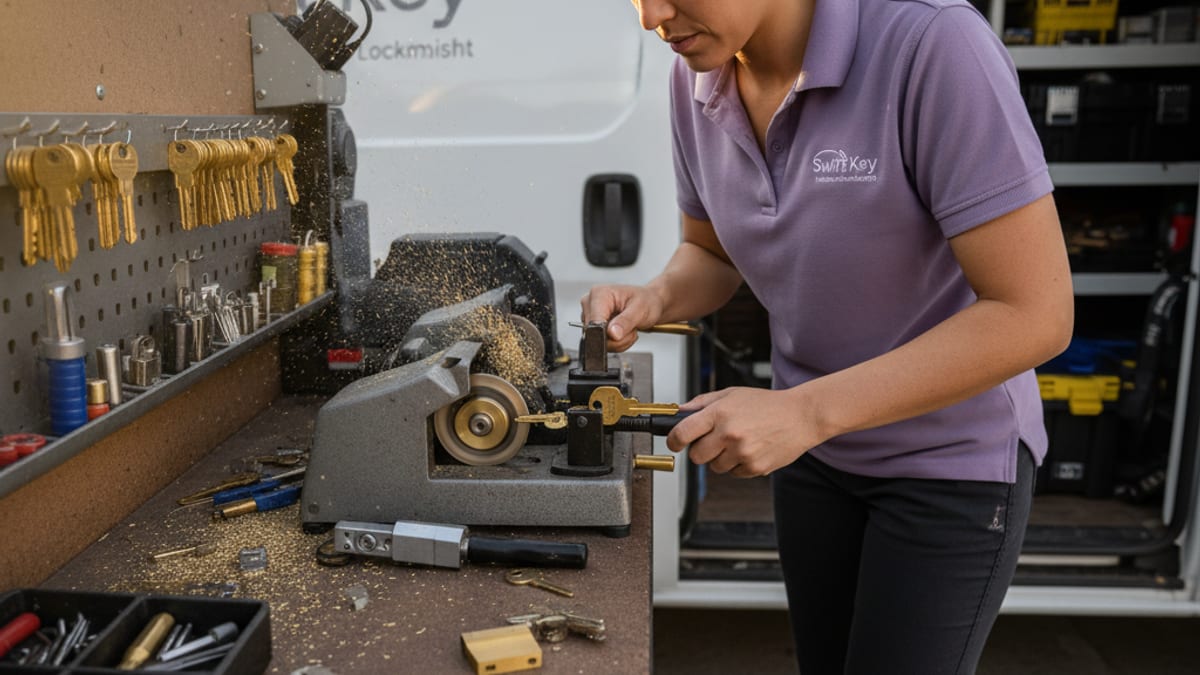
Getting a key copied can be a simple store visit for a common residential blank. It can also fail, or it can be refused, depending on the keyway, wear, electronics, and who is allowed to authorize a copy. Identify the key before you pick a provider.
Swift Key San Diego is a referral service. It does not cut keys. Independent licensed locksmiths confirm whether your key can be copied, what blank they stock, and what they will charge.
The easier copies
These keys are often copied at hardware stores or kiosks when the original is in good condition and the store stocks the blank:
- Common residential keys such as Kwikset KW1 and Schlage SC1 or SC4
- Many basic padlock keys
- Simple desk or cabinet keys, when the blank is in stock
A store or kiosk copy is still a mechanical trace of the original. If the original is worn, the copy can inherit that wear.
Harder copies, and who to ask
Car keys
A blade-only copy is not the same as a working car key. Many vehicles need a transponder or fob programmed to the car. A kiosk that can grind a blade may still leave you with a key that will not start the engine. Ask a locksmith or dealer what your year, make, and model require. Do not assume every car key can be copied from a photo or a blade alone.
If you still have one working key, say so. If every key is gone, that is a different origination or replacement job. See car key replacement.
Mailbox keys
USPS cluster boxes are often controlled by the Postal Service, not by a retail kiosk. If you moved in without a mailbox key, start with your local post office and ask what they require. A locksmith may be able to help with a private mailbox that uses a standard keyway. They cannot assume authority over a USPS cluster lock.
High-security or restricted keyways
Some keys can be copied only through an authorized source for that system, often with ID and a record that you are allowed to order copies. Brand names on the head are a starting clue, not a complete diagnosis. The locksmith or the system’s dealer of record confirms whether they can legally and physically cut that blank.
Filing-cabinet and uncommon commercial keys
Kiosks stock common blanks. Older, equipment, and unusual commercial keys often need a locksmith with a wider blank inventory, or they may not be copyable at all.
Worn-out original keys
A tracing machine copies the worn shape. A locksmith may be able to measure the key or the lock and cut to a factory bitting instead of tracing damage. That is an assessment, not a guaranteed result.
When a kiosk copy doesn’t work
Common reasons a store copy fails:
The original was already worn
The machine traces what you handed it. Fix: have a locksmith inspect the key and, if needed, the lock.
The blank was the wrong profile
A look-alike blank can be slightly off in the keyway. Fix: stop forcing it. Ask a locksmith to match the actual keyway.
The machine was out of calibration
High-use kiosks drift. Trying a second store can work for a simple, unworn key. Repeated failures are a reason to stop tracing copies of copies.
The key is restricted or the blank is not stocked
A refusal may mean the store lacks the blank, not that no one can copy the key. It can also mean the key is controlled. Do not grind a substitute blank as a workaround.
”Do Not Duplicate” stamps
A “Do Not Duplicate” stamp on a common residential keyway is a policy marking. This site does not treat it as a settled California legal prohibition, and it also does not treat the stamp as meaningless. Ask the property owner, manager, or key issuer what their rule is. A genuine restricted keyway is a separate issue: copying depends on that system’s controls, not on the words stamped on the head.
Bulk copies for landlords and small businesses
If you need many copies after a rekey or a staff change, tell the locksmith the count, the keyway, and who is authorized to order them. Do not assume a volume discount. The locksmith sets terms. For buildings with many units, ask whether a master-key plan is even on the table before ordering a pile of identical keys.
Habits that keep duplicates usable
- Keep a backup off the ring you carry every day, assigned to a named person or purpose. See how many spare house keys to make.
- Do not store keys with loose coins that grind the cuts.
- Retire a key that binds before it breaks in the cylinder.
What to tell a locksmith instead of photographing the cuts
Do not photograph both sides of the key with a ruler or coin for scale and send that as a cutting template. Cut geometry in a photo can be misused, and it is a poor substitute for inspecting the key or the lock.
Instead, provide:
- Lock or hardware make and model, if you can read them
- Any keyway, brand, or authorization markings on the key head
- Which door or lock it operates
- Whether you still have the lock available for in-person inspection
- Who is authorized to request a copy (owner, manager, or documented tenant)
Private in-person inspection by the independent locksmith is the safer path when the original is worn, uncommon, or controlled.
Frequently asked questions
How much does key duplication cost in San Diego?
The independent locksmith, store, or dealer sets the price. Ask for an itemized quote that names the blank type, cutting method, any programming, and extra copies. Swift Key does not set duplication fees.
Can any key be copied at a hardware store kiosk?
No. Common unworn house keys are the usual kiosk job. Transponder car keys, many restricted keyways, worn originals, and keys the store does not stock require a locksmith, a dealer, or USPS, depending on the lock.
Why didn’t my kiosk copy work in the lock?
Worn originals, wrong blanks, and uncalibrated tracers are common. A locksmith can inspect the key and the cylinder rather than tracing another generation of the failed copy.
What does “Do Not Duplicate” on a key actually mean legally?
Treat it as a signal to confirm authorization. Do not assume the stamp is either a statewide ban or a free pass. Restricted keyways follow their own dealer rules.
How do I get a copy of a lost transponder car key if I have no original?
That is origination or replacement, not a simple duplicate. The locksmith or dealer must confirm the vehicle, authorization, and whether on-site programming is possible. See car key replacement.
Need a key assessed in San Diego County? Swift Key San Diego refers callers to independent licensed locksmiths for key duplication. The professional confirms the key type, authorization, and price. Call (858) 400-4082.