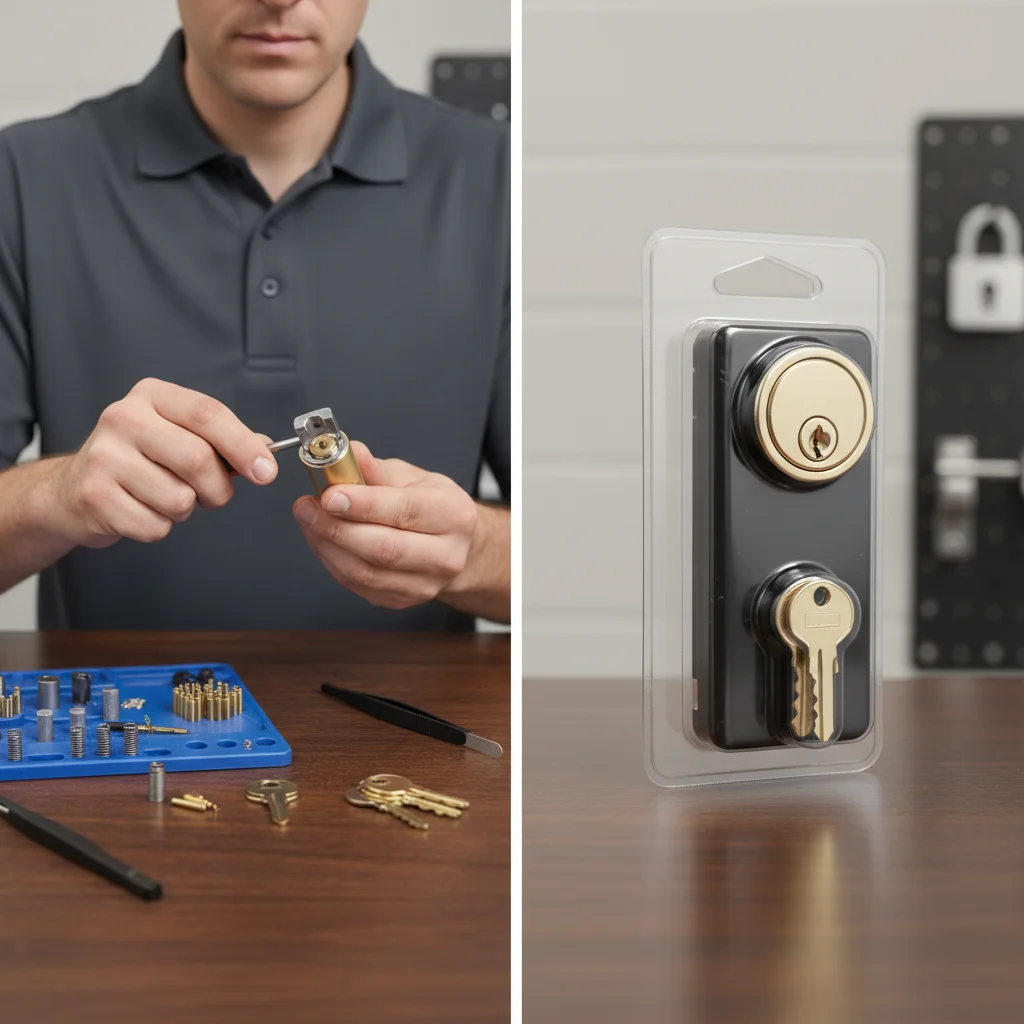
If your existing locks are in good shape and you only need to retire old keys, rekey them. Rekeying changes the internal pins so previous keys no longer work, without replacing the hardware. Replacement makes sense when locks are damaged, worn, incompatible with a single-key plan, or you are upgrading to a smart lock or a different security grade.
Swift Key San Diego is a referral service. Independent licensed locksmiths inspect each door, confirm what is possible, and set the price. Ask for an itemized quote before work begins.
What rekeying actually changes inside the lock
Think of it as changing the combination for your door. The deadbolt, knob, and casing stay in place. What changes is the pin stack inside the cylinder.
Inside a standard pin-tumbler lock, pins of different lengths must line up at the shear line when the correct key is inserted. A lock rekey replaces those pins so they match a new key. The old key then fails to align the pins.
Useful outcomes when the hardware is sound:
- Old keys stop working, including copies you cannot account for.
- Compatible cylinders of the same brand and keyway can often share one new key.
- You keep hardware that still operates smoothly.
Rekeying is an access-control change. It is not a rebuild of a failing lock.
When rekeying isn’t an option
Rekeying only works if the lock itself is in good working order.
1. The lock is damaged or worn out. If the lock is sticky, hard to turn, loose in the door, or visibly corroded, re-pinning does not restore the mechanism. Lock replacement is the safer path.
2. You want a security or style upgrade. A new finish, a stronger deadbolt, or different trim requires new hardware. Rekeying cannot change the lock’s physical grade or appearance.
3. You’re switching to a smart lock. A keypad or smart lock replaces the unit. You may still rekey other mechanical doors so they match a remaining physical key, if the brands allow it.
4. Your locks are from different, incompatible brands. A Kwikset, a Schlage, and a Weiser cannot share one key through rekeying alone. Their keyways differ. To consolidate, you replace some or all locks with one brand, then rekey the matching set.
What belongs on an itemized quote
Do not rely on a round “whole house” number. Ask the independent locksmith to list:
- Service call or trip charge, if any
- Each cylinder: rekey, replace, or leave as-is
- Brand and keyway of each lock
- Whether keyed-alike is possible without new hardware
- Number of new keys included, and the price of extras
- Any smart-lock pairing, alarm, or strike-plate work
- Whether the job is residential pin-tumbler, high-security, or master-keyed
Those inputs, not a published range, are what make two homes cost different amounts. Swift Key does not set locksmith fees.
Replacement quotes should also list hardware model, who supplies the lock, labor per opening, and what happens to the old parts.
Lifespan: access control versus hardware condition
Rekeying does not reset mechanical wear. A lock that already binds will still bind after new pins go in. Coastal salt air can corrode finishes and internal parts; that is a reason to inspect, not a reason to assign a year count.
Replacement starts you with new hardware. How long that hardware lasts depends on grade, install quality, use, and environment. Ask the locksmith what they observe on your doors rather than treating any lock as good for a set number of years.
Rule of thumb: rekeying is about who has a working key. Replacement is about whether the hardware still protects the door.
Mixed approach: rekey some, replace others
You do not have to choose one method for every door. A common mixed plan:
- Front door: sound deadbolt. Rekey.
- Back patio: loose or corroded hardware. Replace with a proper deadbolt.
- Garage service door: compatible brand in decent condition. Rekey to match the front key if the keyway allows it.
- Side gate: seized padlock. Replace.
That mix avoids paying for new hardware on doors that still work, and it avoids re-pinning locks that are already failing.
After a move-in or a break-in
After a move-in: Prior owners, agents, and contractors may still have keys. If the hardware works, a full exterior lock rekey is the usual access reset. Rekeying or replacing when moving in covers owner versus renter authority.
After a break-in:
- If entry was by a stolen or copied key and the lock is not physically damaged, rekeying can retire that key.
- If the lock was kicked, drilled, pried, or the strike failed, replace the damaged parts. Rekeying cannot restore a bent or split mechanism.
The locksmith should inspect the door, frame, and strike, not only the cylinder.
Frequently asked questions
Is getting a lock rekeyed cheaper than buying new lock hardware?
Often, because you are not buying a new lock for every door. That is not always true if several cylinders must be replaced for compatibility or damage. Compare itemized rekey and replacement quotes for the same doors.
How long does a rekey take?
The independent locksmith sets the schedule. They re-pin cylinder by cylinder, cut keys, and test each lock. Ask how many openings they expect to finish in the visit.
Can I rekey my locks myself without a locksmith?
Some Kwikset SmartKey cylinders are designed for owner rekeying with the manufacturer’s tool. Standard pin-tumbler locks from other brands usually need a pinning kit and practice. A mistake can leave the lock unusable. Confirm the exact model before attempting it.
Does rekeying work if I have different lock brands on different doors?
You can rekey each brand to its own new key. You cannot make different keyways share one key. One-key convenience usually means replacing some locks, then rekeying the matching set.
When does it make sense to replace locks instead of rekeying after a break-in?
Replace when the lock, bolt, or strike was physically damaged. If a stolen key was used and the hardware is intact, rekeying can be enough. Have the locksmith assess the opening on site.
When to call
There is a third option when only the cylinder has failed: replacing just the lock cylinder can keep the trim and the bolt. Deciding between rekeying and replacing depends on hardware condition, compatibility, and your access goals.
Call (858) 400-4082 for a referral. The matched locksmith inspects the doors and quotes the work under their own terms.