How to lubricate a sticky door lock
A key that turns sluggishly doesn't need WD-40 (which attracts dust and gums up the mechanism over time). It needs a dry lubricant, graphite or Teflon-based, applied sparingly. This is a five-minute fix that extends the life of a lock by years.
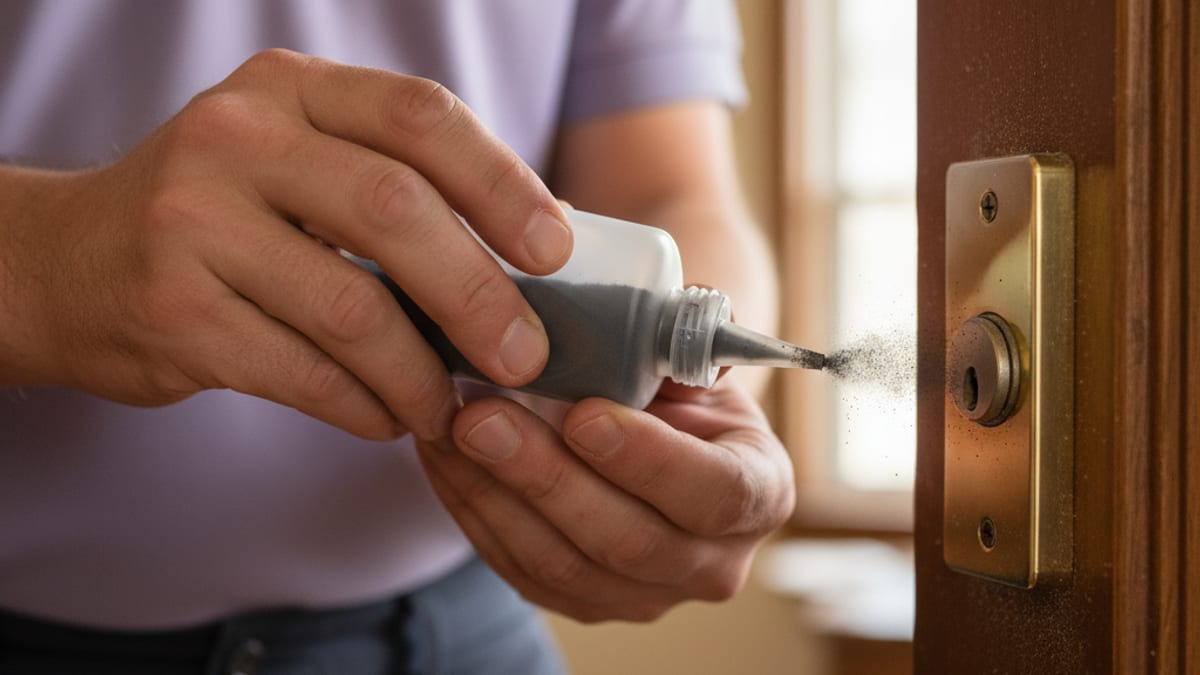
What you'll learn
- Why WD-40 is the wrong choice for locks
- Which lubricant to use (and how much)
- How to work the lubricant into the mechanism
Step by step
- [object Object]
- [object Object]
- [object Object]
- [object Object]
- [object Object]
[object Object]
Rather have a pro handle it?
Mobile locksmith service across San Diego County. One local number, not a call center.
Keep learning.
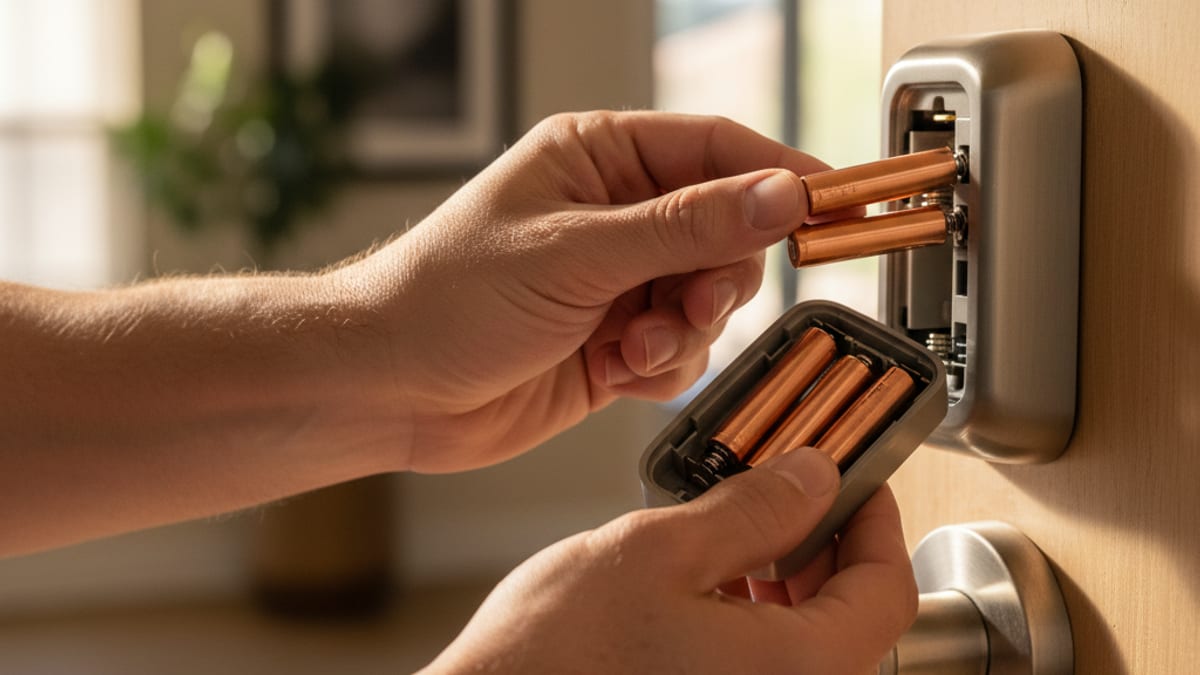
How to change smart-lock batteries
Keypad and smart locks run on batteries (usually 4x AA). When the batteries get low, the keypad gets slow, the motor labors, and eventually the lock stops responding. Most brands give you a low-battery warning weeks in advance, swap them before they die at the wrong time.
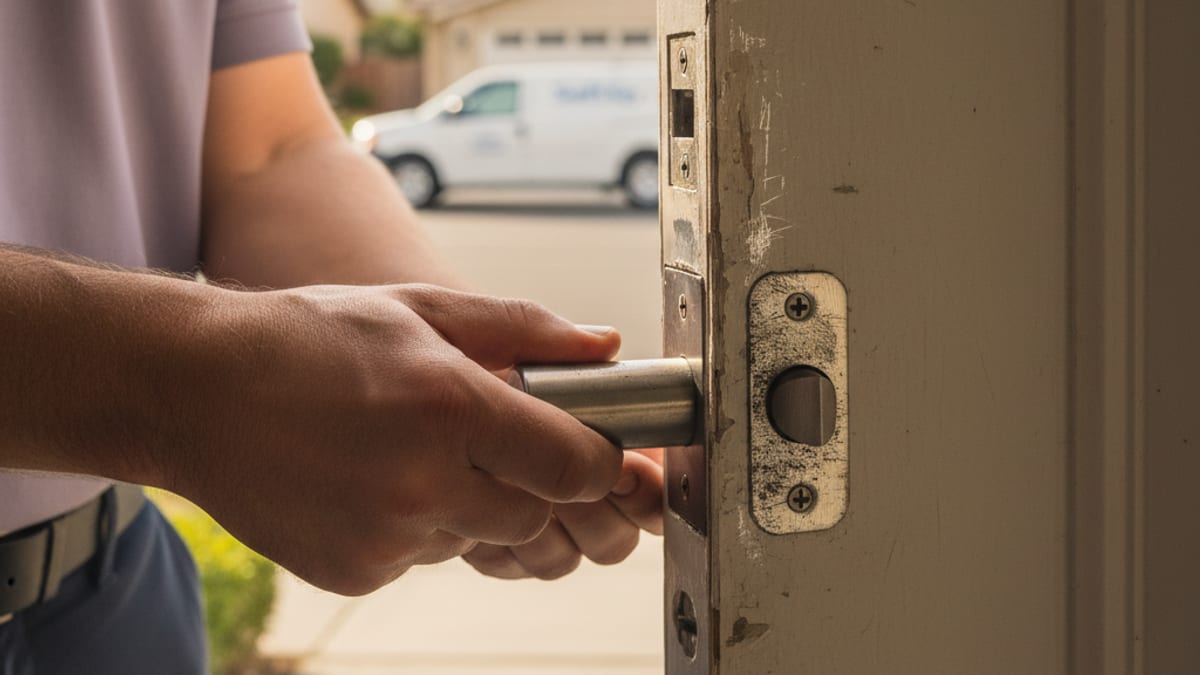
How to test and fix deadbolt alignment
A deadbolt that sticks, binds, or requires lifting the door to engage is misaligned. Over time this wears out the lock mechanism and lets the door swing loose even when you think it's locked. The fix is almost always cheap, adjusting the strike plate.
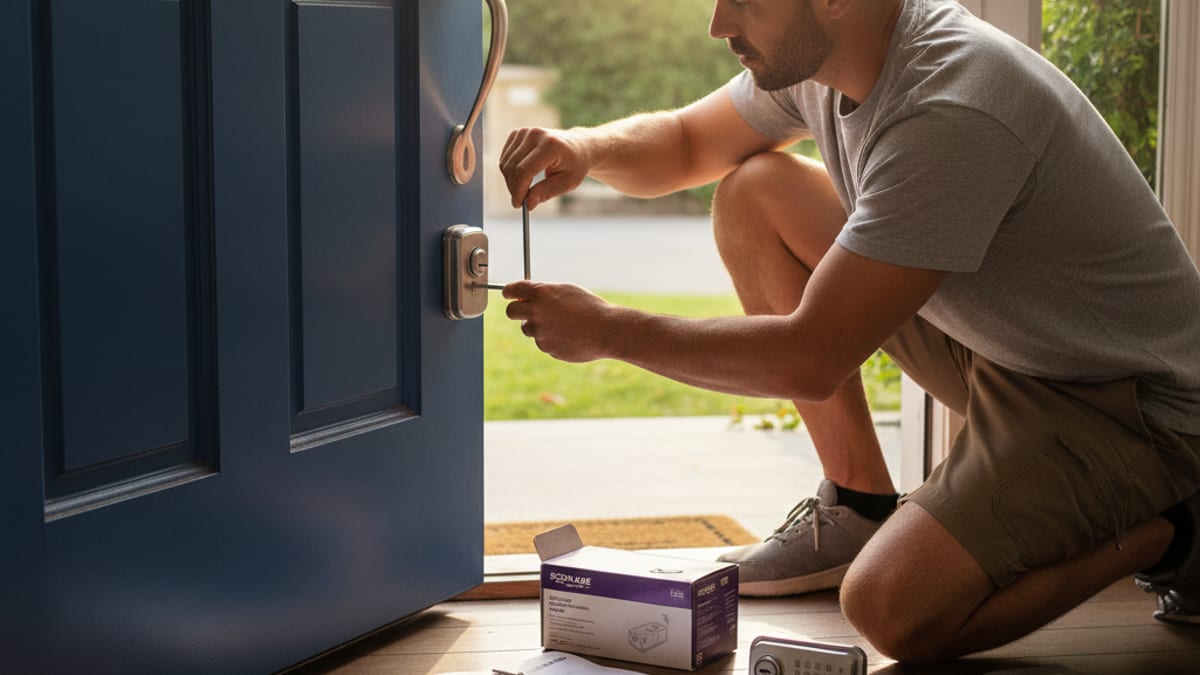
How to install a smart lock on an existing deadbolt
Most retrofit smart locks (August, Level, Nuki) install on the interior side of your existing deadbolt, keeping your exterior hardware and physical keys the same. Full replacement smart locks (Schlage Encode, Yale Assure) swap both sides. The install is quick either way if your door is prepped correctly.